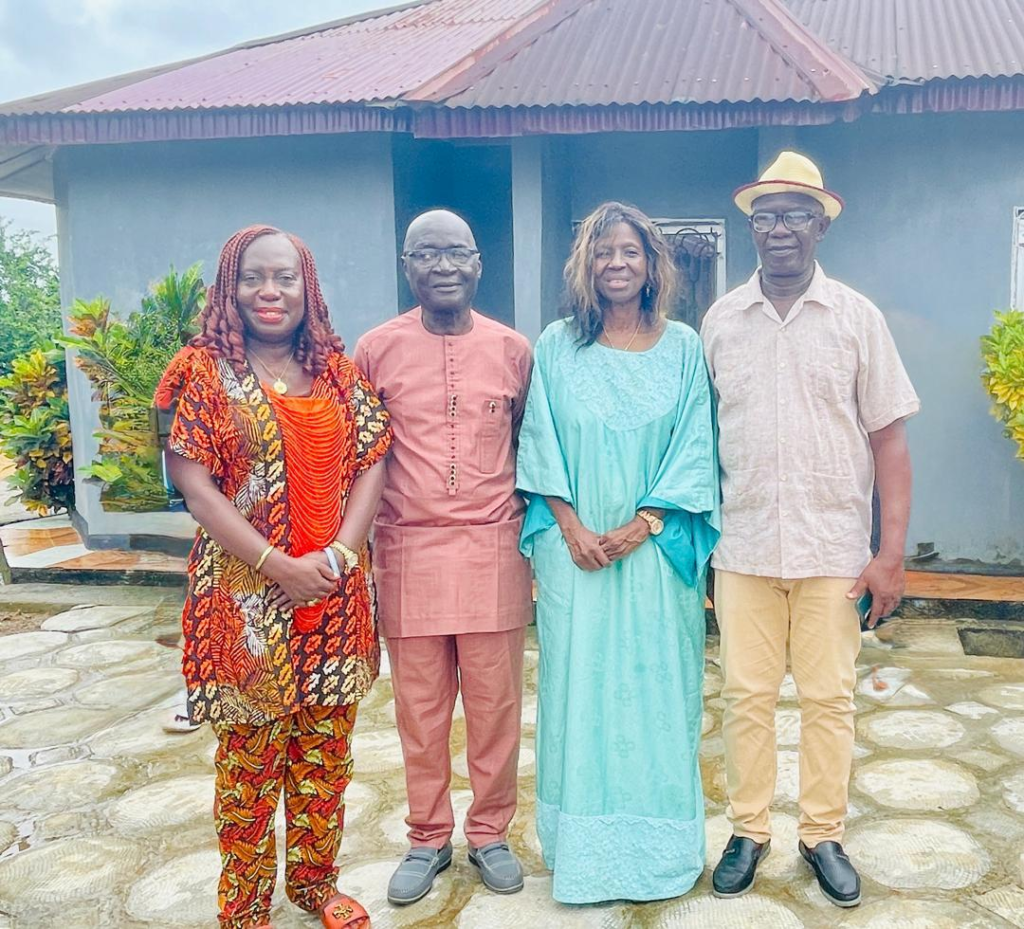
The Ministry of Planning and Economic Development (MoPED) has today on Saturday, 12th September 2026, advanced its participatory Chiefdom Development Planning exercise with a pre-engagement meeting for stakeholders of Sorogbema Chiefdom, held in Jendema, Pujehun District. The engagement brought together the Minister of Planning and Economic Development, Hon. Kenyeh Barlay; Director M’balu Kamara representative of the Ministry of Local Government and Community Affairs (MLGCA) and Pujehun District Council; traditional authorities; security sector representatives; the MoPED technical team; and stakeholders representing all 12 sections of Sorogbema Chiefdom. The programme was chaired by Mohamed Rogers, Chiefdom Security Coordinator (CS Coord/ONS), who welcomed participants and highlighted the importance of effective stakeholder coordination in advancing development within the chiefdom. In her statement, Minister Barlay underscored the importance of developing a Chiefdom Development Plan that is genuinely owned by the people and reflects their priorities and aspirations. She explained that while MoPED would provide the technical guidance required, communities and local stakeholders must take ownership of identifying and prioritising the interventions they consider most critical to their development. She stressed that development planning should not focus solely on social infrastructure such as schools, health centres and water facilities, but should also identify productive and income-generating projects capable of creating economic opportunities and contributing to sustainable local development. Minister Barlay further emphasised the need for the Chiefdom Development Plan to align with the Medium-Term National Development Plan and Government’s broader development priorities, while ensuring effective coordination between chiefdom, district and national planning structures. She also stressed that development plans must translate into tangible results, noting that a plan should provide a practical framework for identifying priority projects, mobilising resources and guiding implementation rather than simply remaining as a document. The Director of Rural Development (RDD), M’balu Kamara, presented on the proposed consultation process and outlined what stakeholders and community representatives are expected to do ahead of the main consultation. Director Kamara explained that representatives selected from the 12 sections are expected to consult with their respective communities beforehand and gather their views, concerns and development priorities. This, he noted, would ensure that representatives attend the consultation carrying the collective voice of the communities they represent rather than presenting only their personal opinions. He emphasised that the process is intended to be inclusive and community-driven, with the technical team providing guidance and facilitating the process while communities determine their own development priorities. Each of Sorogbema’s 12 sections is expected to identify three representatives, resulting in 36 section-level representatives. The representation is expected to include traditional leadership, a woman representative and another relevant community representative. The third category may include youth, persons with disabilities, religious leaders, farmers, teachers, service providers, transport operators and other relevant community groups. In addition to the 36 section-level representatives, five chiefdom-level stakeholders will also be identified to participate in the consultation process. Director Kamara further explained that the 12 sections would be clustered according to geographical proximity under Far, Medium and Near categories to facilitate the deployment of data collectors and ensure effective coverage during the data-collection exercise. She urged the selected representatives to engage their communities meaningfully and ensure that the priorities presented during the consultation are broad, inclusive and reflective of the actual needs of the people. She further explained that following the pre-engagement, stakeholders are expected to finalise the representation arrangements, confirm the section clustering and identify the data collectors and facilitators ahead of the main consultation. Sierra Leone’s Ambassador to Liberia, Amb. Edie Sidike Massalay, welcomed the initiative and emphasised the importance of development planning that responds to the realities and aspirations of local communities. Ambassador Massalay encouraged stakeholders to actively participate in the process and ensure that the priorities identified through the consultation provide a sound basis for addressing the development needs of Sorogbema Chiefdom. The Paramount Chief of Sorogbema Chiefdom, PC Mustapha Jengay Massaquoi III, welcomed Minister Barlay and the MoPED team to the chiefdom and expressed appreciation for the Ministry’s decision to engage communities directly in the development planning process. He underscored the importance of allowing the people to articulate their own priorities and reaffirmed the commitment of the traditional leadership to supporting the process and ensuring broad community participation. Representing the Sierra Leone Police Mano River Division, Mr. Solomon S. Conteh, LUC, assured stakeholders of the continued commitment of the security sector to maintaining peace and stability to support development activities within the chiefdom and the wider district. Mr. Ibrahim Kamara, MoPED–UNDESA Section Consultant, encouraged the communities and selected representatives to actively participate throughout the planning process. He noted that the consultation and subsequent data-collection exercise would require close collaboration with the people of Sorogbema, whom he will work with in gathering the information needed to inform the Chiefdom Development Plan. The engagement also provided an opportunity for stakeholders to discuss the importance of strengthening local coordination mechanisms through which development priorities can be identified, documented and channelled into district and national planning processes. The consultation will subsequently be followed by data collection, processing and analysis, before stakeholders reconvene to validate the findings and priorities for incorporation into the final Sorogbema Chiefdom Development Plan. The process reflects MoPED’s continued commitment to strengthening participatory, inclusive and community-driven development planning, ensuring that the priorities of local communities are systematically captured and linked to broader district and national development frameworks. MoPED Communications