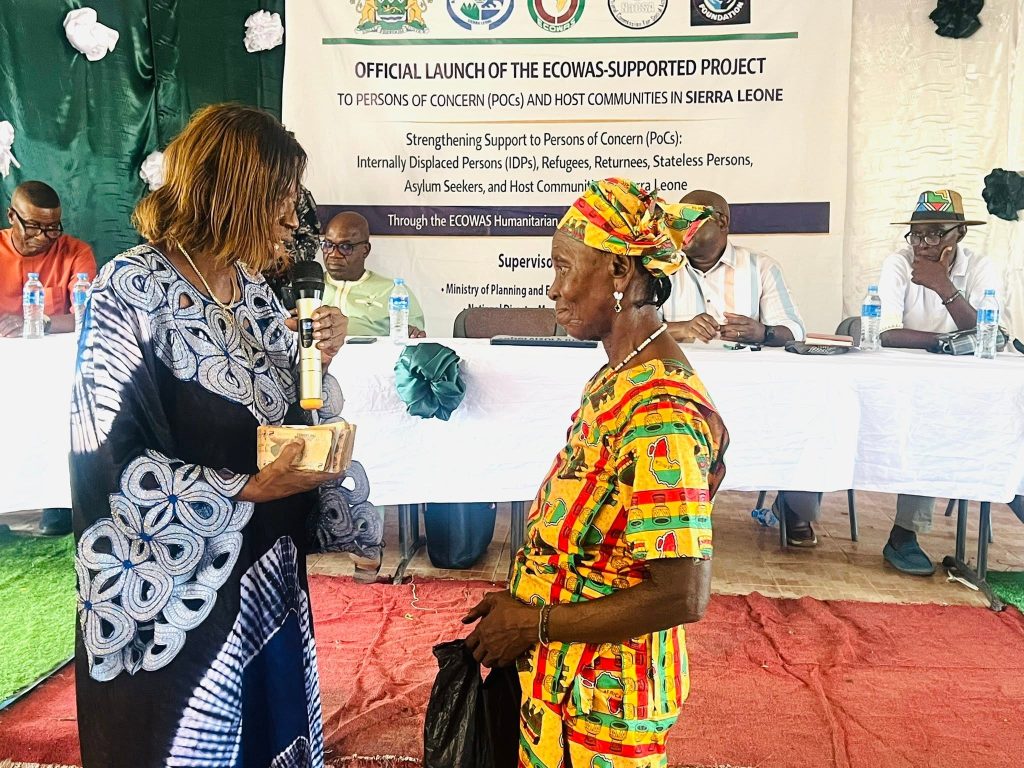
Government of Sierra Leone and ECOWAS Launch Humanitarian Project to Support Persons of Concern and Host Communities
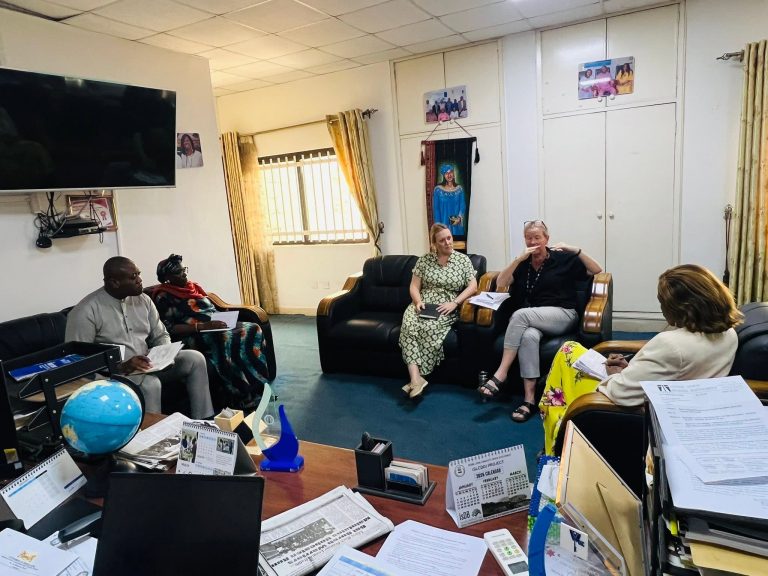
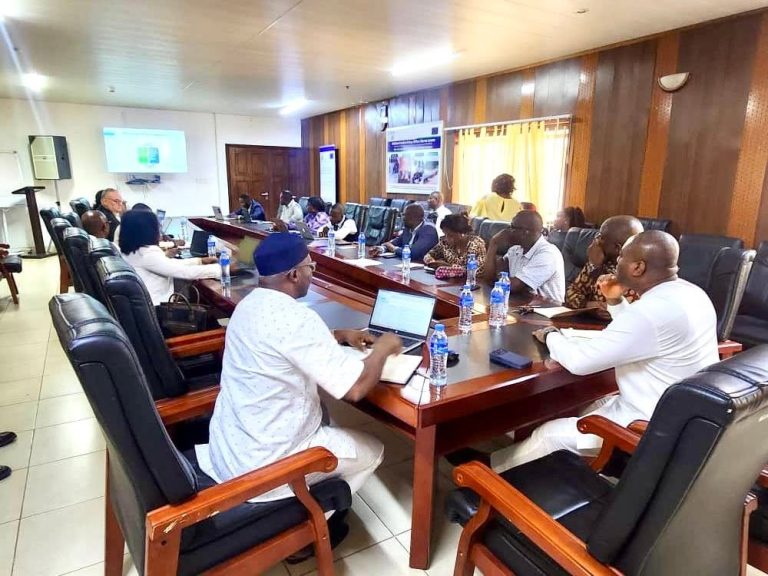
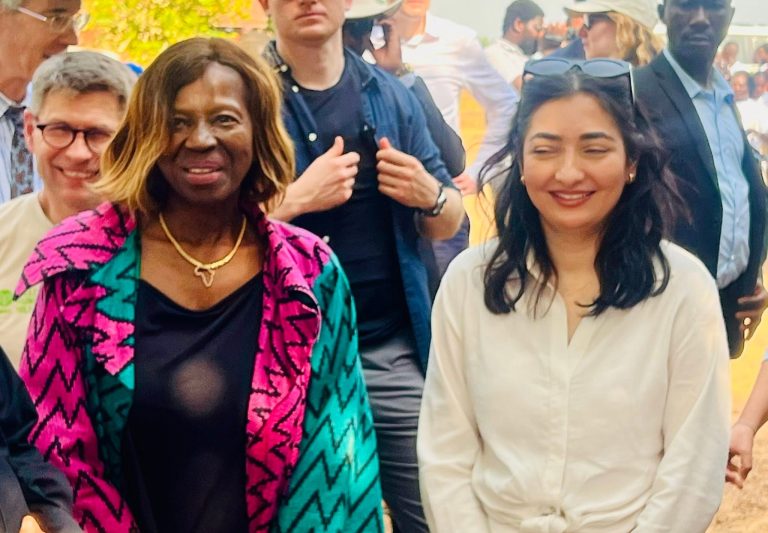
*Taiama, Moyamba District, 8th January, 2026*: The Government of Sierra Leone, in partnership with the Economic Community of West African States (ECOWAS), has officially launched a major humanitarian intervention aimed at improving the welfare, resilience, and socio-economic recovery of Persons of Concern (PoCs) and vulnerable host communities across the country. The ECOWAS-supported initiative was formally launched in Taiama, bringing together senior government officials, development partners, and community stakeholders to reaffirm collective commitment to protecting vulnerable populations affected by displacement, climate shocks, and socio-economic hardship.
The project, implemented through the ECOWAS Humanitarian and Social Affairs Directorate, targets PoCs including Internally Displaced Persons (IDPs), refugees, returnees, stateless persons, asylum seekers, and vulnerable host communities. It is designed to strengthen protection systems, restore dignity, and enhance resilience through integrated humanitarian and early recovery interventions that complement national development and disaster management priorities.
The intervention will directly benefit 3,837 vulnerable persons across Taiama, Bonthe, Pujehun, Port Loko, and Kambia districts. Key components include direct cash transfers to vulnerable households, livelihood and income support for women engaged in small-scale businesses within refugee and traditional host communities, cash assistance to IDPs, installation of solar-powered borehole water facilities, and the distribution of essential food and non-food relief items.
The project is being jointly supervised by the Ministry of Planning and Economic Development (MoPED), the National Disaster Management Agency (NDMA), the National Commission for Social Action (NaCSA), and other relevant institutions, reinforcing government leadership, coordination, and accountability in humanitarian response and recovery efforts.
In his opening remarks, the Deputy Minister of Planning and Economic Development, Rev. Dr. Jonathan Titus-Williams, commended ECOWAS for complementing the Government’s efforts to address disaster impacts and reduce poverty. He described the project as a critical intervention that responds directly to the needs of vulnerable communities while aligning with national development priorities.
Also speaking at the event, the Director-General of the National Disaster Management Agency, Mr. John Vandy Rogers, praised His Excellency the President for establishing strong disaster management institutions and reaffirmed NDMA’s commitment to supporting affected communities. He lauded MoPED, ECOWAS, and NaCSA for their collaboration, noting that the project will help address displacement, vulnerability, and poverty among Persons of Concern.
Deputy Commissioner of NaCSA, Dr. Susan Roberts, said the agency has long worked to address vulnerability in deprived communities, highlighting that residents of Kori Chiefdom in Moyamba District have faced prolonged hardship due to repeated shocks. She explained that the project focuses primarily on cash transfers and the construction of solar-powered boreholes, while also drawing attention to the challenges faced by stateless persons. Dr. Roberts reiterated NaCSA’s mandate to deliver social relief and promote sustainable, community-driven development in partnership with government, donors, and civil society.
Delivering a keynote statement, the ECOWAS Ambassador and Resident Representative to the Republic of Sierra Leone, H.E. Amb. John Azumah, conveyed warm greetings from the President of the ECOWAS Commission, H.E. Dr. Omar Alieu Touray. He described the project as a clear demonstration of ECOWAS’ commitment to regional solidarity, human security, and people-centred development.
Ambassador Azumah noted that displacement and climate-related shocks continue to pose serious humanitarian, social, and economic challenges across the sub-region, particularly in Sierra Leone. He emphasized that ECOWAS recognizes the urgent need to go beyond emergency response by supporting community-based interventions that restore dignity, strengthen resilience, and complement national efforts. He explained that the decision to work through a community-based organization, Achievers Foundation, was deliberate, given its proximity to communities and ability to deliver assistance in a timely and accountable manner, while ECOWAS maintains oversight to ensure transparency and impact.
Minister Kenyeh Barlay, in her keynote address, underscored that many communities have endured repeated shocks over recent years, including flooding, fires, and storms, leaving Persons of Concern increasingly vulnerable. She welcomed the swift response from ECOWAS, noting that unlike previous experiences where assistance took years to materialise, the current intervention was timely and responsive to urgent needs. She commended NDMA and NaCSA for their coordination and stressed the importance of sustainable interventions such as access to clean water and livelihood support to reduce long-term vulnerability.
She further highlighted that ECOWAS is not only a humanitarian actor but also a long-term development partner, supporting security, democracy, economic integration, and regional stability. Aligning the intervention with Sierra Leone’s Medium-Term National Development Plan (MTNDP), the Minister noted that its focus on social protection, climate resilience, and economic inclusion directly supports national priorities. She thereafter officially launched the implementation of the project.
Providing an overview of the intervention, Madam Memunatu E. Lamina , Project Coordinator, explained that the project adopts an integrated humanitarian and early recovery approach, jointly implemented by NaCSA and NDMA. She disclosed that although only 50 percent of the required funding has been received so far, implementation has commenced while efforts continue to mobilise the remaining resources. She added that the project will empower women’s livelihoods, expand access to safe water, deliver emergency relief, and strengthen health, hygiene, and community resilience through complementary activities such as capacity building, monitoring and evaluation, and community engagement.
Overall, the ECOWAS-supported project seeks to address urgent humanitarian needs of Persons of Concern while laying the foundation for sustainable recovery, social cohesion, and improved quality of life for vulnerable populations in refugee host communities and affected areas across Sierra Leone.
For further enquiries, contact:
Alfred Kabia — +232 79174027
Follow MoPED on Twitter (@moped2025), Facebook, or visit www.moped.gov.sl