
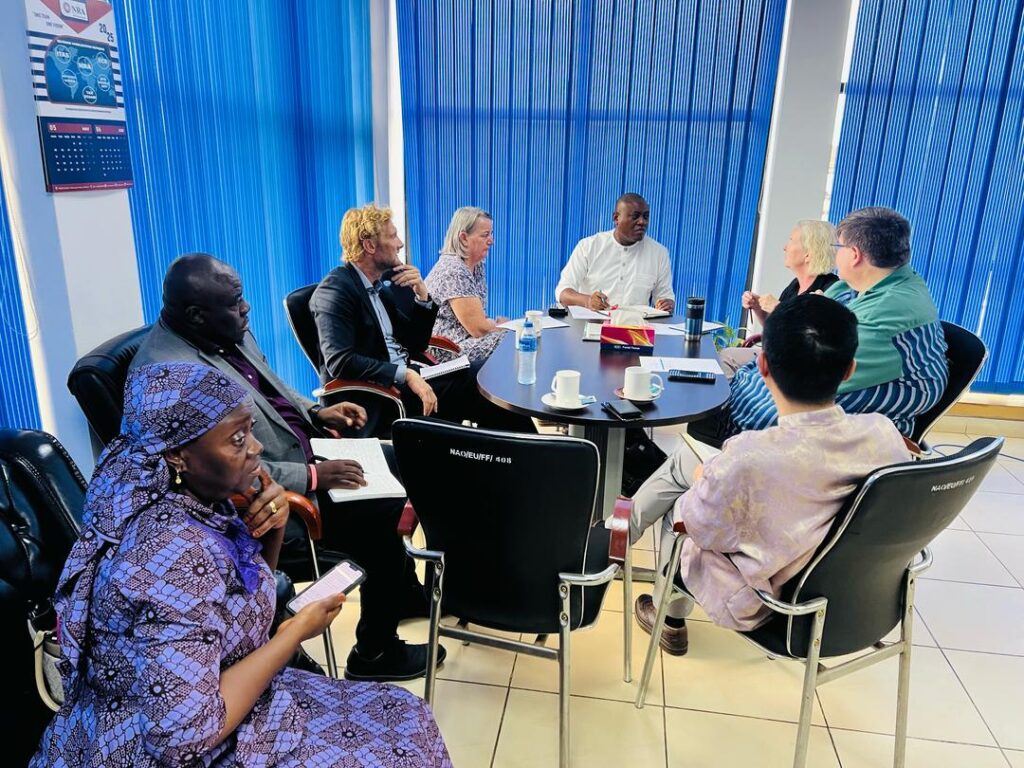
The newly appointed Development Secretary at the Ministry of Planning and Economic Development (MoPED), Mr. Ambrose James, on Monday hosted a high-level breakfast meeting with Sierra Leone’s major development partners. The meeting brought together representatives from the United States Embassy, Irish Embassy, German Embassy, Chinese Embassy, the British High Commission, the UN Resident Coordinator’s Office, and the African Development Bank (AfDB) to explore ways to enhance development coordination and to share updates on the national Mpox response. The engagement served as a familiarization forum and a platform for open dialogue on how to strengthen the country’s coordination architecture. In his opening remarks, Mr. James underscored the need for a more structured, transparent, and responsive approach to development coordination. “*As Development Secretary, I believe we must acknowledge that while some progress has been made, a great deal of work still lies ahead. There is a clear need for us to be more honest with ourselves and to adopt a more structured and focused approach to our coordination efforts*,” he stated. Mr. James pointed to the persistent misalignment between national and district-level development planning processes, citing the slow finalization of district plans despite the existence of a national framework. He emphasized the need to synchronize planning timelines to improve integration and impact. The meeting also delved into the effectiveness of existing coordination mechanisms such as annual planning meetings and sector working groups. “*We need to ask ourselves whether these platforms are serving their intended purpose, or whether it’s time for a critical review. Our structures must deliver results*,” Mr. James said. In discussions around the Mpox outbreak, Wang Peng of the Chinese Embassy shared insights from their prior engagement, highlighting lessons from the government’s six-week intervention plan supported by China. He acknowledged that the intervention did not yield the desired outcomes, but reaffirmed China’s commitment to continue providing technical and material support as needed. He also emphasized the importance of cross-ministerial coordination among Health, Planning, and Foreign Affairs. Alex MaClean from the British High Commission welcomed the Development Secretary’s call for a central coordination hub. He noted that development partners are largely neutral about which institution leads—whether Planning, Finance, or the Chief Minister’s Office—what matters most is that government speaks with one voice and establishes a clear, functional mechanism that integrates both planning and financing responsibilities. The Development Secretary agreed, stressing that real coordination requires a central dashboard—an active platform that shows who is doing what, where, and with whom. This, he said, would reduce duplication, support evidence-based planning, and foster greater transparency. The role and effectiveness of the Development Partners Committee (DEPAC) also came under scrutiny. Several participants expressed concerns that DEPAC has become more reactive than strategic, with limited follow-up on key outcomes. Carol Hannon of the Irish Embassy emphasized that DEPAC should be more than a space for updates—it should be a venue where strategic decisions are made and aligned with national priorities. Johannes Beureus of the German Embassy added that to make DEPAC more meaningful, much of the technical and operational work must happen in smaller, well-prepared working groups ahead of time. This would enable the main sessions to focus on high-level, strategic issues. Commenting on the evolving global financing landscape, Gbassay Kargbo from the UN Resident Coordinator’s Office pointed out that shifts in donor country priorities—especially increased allocations toward defense and security—are already affecting aid flows. He stressed that this makes strategic planning, efficiency, and private sector engagement more critical than ever. The U.S. Ambassador updated the meeting on the American government’s $2.5 million Mpox response package. Meanwhile, the German Embassy representative outlined targeted interventions in Kambia, Pujehun, and Kailahun—districts identified as particularly vulnerable. The German support focuses on mobilizing community leaders for risk communication and prevention, alongside collaboration with WHO on case management, contact tracing, and frontline health worker training. China’s support to the Mpox response has included the deployment of three vaccine teams, provision of medical supplies, and continued collaboration with Africa CDC to strengthen local disease surveillance and preparedness. Looking ahead, the Development Secretary urged more discipline in Sierra Leone’s international engagements, particularly regarding global conferences. He emphasized the need for small, effective delegations and early information-sharing with development partners to ensure strategic alignment and opportunities for joint advocacy. He noted that when Sierra Leone participates in international conferences, it is essential that the messaging is clear, delegations are lean, and the objectives are aligned with both national priorities and the interests of international partners. Prosper Charle from the African Development Bank (AfDB) shared updates on forthcoming interventions, which will focus on improving public transportation and infrastructure to enhance regional mobility. Additional priorities include the establishment of a special agro-processing zone targeting alcohol production through the rice value chain, strengthening of energy infrastructure in partnership with the Energy Ministry, and sustained investment in water and sanitation (WASH) programming to improve community access to clean water and sanitation services. In his closing remarks, the Development Secretary thanked all attendees for their insights and engagement. He reaffirmed his commitment to ensuring that development coordination is not only technically sound but also strategically driven, focused on tangible results, and built through strong, collective partnerships. *For more information, please contact Alfred Kabia at +232 79174027, or visit MoPED’s social media platforms*: *Twitter (@moped2025), Facebook, or the official website at www.moped.gov.sl*. End.